


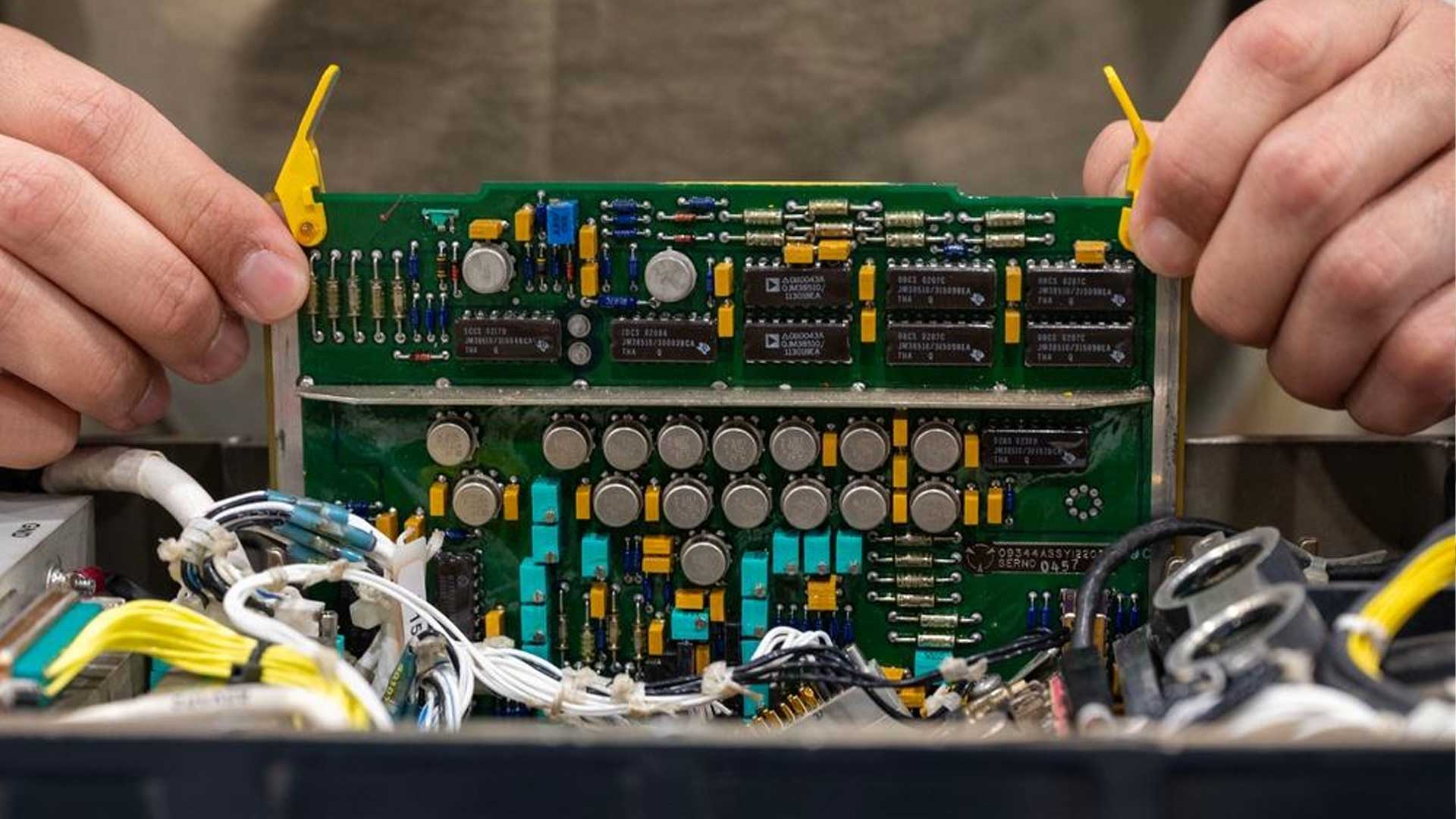
Modern military systems are engineered for durability, reliability, and extended operational service. Fighter aircraft, naval vessels, radar installations, communications networks, and ground combat vehicles often remain in service for several decades. Throughout their operational lifetimes, these platforms depend on thousands of individual components that must remain available for maintenance, repair, and replacement.
However, the commercial technology markets supplying many of these components operate on substantially shorter product lifecycles. Semiconductor manufacturers regularly discontinue older devices, introduce new architectures, and redirect production capacity toward emerging technologies. Mechanical and electrical component suppliers face similar pressures as manufacturing processes evolve and demand shifts toward newer products.
The resulting mismatch creates one of the defense industry’s most persistent sustainment challenges: component obsolescence.
A military platform may remain operationally relevant for another twenty years while the manufacturer of a critical electronic component has already ceased production. When replacement inventory becomes scarce, defense organizations must identify alternative sources, qualify substitute components, or invest in costly redesigns to maintain operational capability.
As military platforms continue to age and commercial technology cycles accelerate, managing obsolescence has become an increasingly important element of defense logistics and supply chain planning.
Understanding Diminishing Manufacturing Sources and Material Shortages
The Department of Defense uses the term Diminishing Manufacturing Sources and Material Shortages (DMSMS) to describe the loss or impending loss of manufacturers or suppliers of critical items, raw materials, or software.
DMSMS issues can emerge for several reasons. A manufacturer may discontinue a product because demand has declined, a production facility may close, or a specialized manufacturing process may no longer be economically viable. In other cases, regulatory changes, material restrictions, or geopolitical disruptions may reduce the availability of previously accessible components.
Although DMSMS is frequently associated with semiconductors, the problem extends across virtually every category of military equipment. Electrical connectors, sensors, hydraulic assemblies, specialized fasteners, structural materials, and software dependencies can all become difficult to obtain over time.
For defense organizations, the consequences depend on the criticality of the affected component and the availability of suitable alternatives. Some obsolete parts can be replaced through straightforward procurement substitutions, while others require extensive engineering analysis, testing, or system modifications.
The challenge is particularly pronounced when a component was designed specifically for a limited-production military application. Specialized parts may have few alternative manufacturers, making replacement difficult once the original production capability disappears.
Effective DMSMS management therefore requires continuous monitoring of component availability and a coordinated strategy for addressing emerging shortages before they disrupt operations.
Why Commercial Technology Cycles Create Defense Sustainment Risks
The defense industry increasingly relies on commercial off-the-shelf (COTS) technologies to reduce development costs and incorporate advances from the broader commercial market.
Commercial electronics provide substantial advantages, including access to modern processing capabilities, established manufacturing infrastructure, and competitive component pricing. However, these benefits introduce lifecycle management challenges when products are integrated into platforms intended to operate for decades.
Semiconductor manufacturers typically make production decisions based on commercial demand, manufacturing economics, and technological competitiveness. When a product generation becomes less profitable or is replaced by newer technology, the manufacturer may issue an end-of-life notification and eventually discontinue production.
For commercial equipment manufacturers, this transition may be manageable because products can be redesigned or replaced relatively quickly. Military systems, however, often operate under strict configuration control and qualification requirements.
Replacing an obsolete microprocessor, memory device, or communications component may require changes to circuit boards, firmware, software interfaces, or supporting electronics. Even when a newer component offers superior performance, it may not be directly compatible with the original system.
Additional testing may be required to verify environmental performance, electromagnetic compatibility, reliability, and other mission-specific requirements.
Consequently, a component that originally cost only a few dollars may create a sustainment problem requiring substantial engineering resources to resolve.
The Financial and Operational Consequences of Obsolescence
Component obsolescence can generate costs far exceeding the value of the affected parts.
When a manufacturer discontinues a critical component, procurement organizations may need to locate remaining inventory, negotiate specialized production arrangements, or identify alternative sources. If existing inventory cannot support anticipated demand, engineering teams may be required to redesign assemblies or modify equipment configurations.
These activities can involve design engineering, prototype development, qualification testing, documentation updates, and changes to manufacturing processes.
For operational systems, obsolescence can also affect maintenance schedules and equipment availability. A platform awaiting a difficult-to-source replacement component may remain unavailable even when the remainder of the system is fully functional.
The effects can become more pronounced across large fleets. If multiple aircraft, vehicles, or installations depend on the same obsolete component, a single supply constraint can create widespread maintenance and sustainment challenges.
Obsolescence also complicates long-term budgeting. Programs may face unexpected expenditures for redesigns, component authentication, or specialized manufacturing services that were not anticipated during initial acquisition.
These consequences illustrate why proactive obsolescence management is generally preferable to addressing shortages only after replacement inventory has been exhausted.
Proactive Lifecycle Management and Early Warning Systems
One of the most effective approaches to managing obsolescence is identifying potential component shortages before they become immediate procurement problems.
Proactive lifecycle management begins with accurate component information. Defense manufacturers and sustainment organizations must understand which parts are used throughout their systems, who manufactures them, and whether those manufacturers intend to continue production.
Bills of materials (BOMs), manufacturer product notices, component lifecycle databases, and supplier communications can provide valuable information about emerging obsolescence risks.
When manufacturers announce product discontinuations, procurement and engineering teams can evaluate available options while inventory remains accessible.
These options may include purchasing additional components, identifying compatible alternatives, qualifying new suppliers, or planning future redesigns.
The timing of these decisions is particularly important. Organizations that identify obsolescence early may have several viable mitigation strategies, while those responding after production has ended may face substantially higher costs and fewer sourcing options.
Effective lifecycle management also requires periodic reassessment. Components that were considered readily available during initial system development may become constrained as market conditions change.
By incorporating lifecycle monitoring into routine sustainment activities, defense organizations can reduce the likelihood of unexpected shortages and improve long-term procurement planning.
Last-Time Buys and Strategic Inventory Planning
When a component manufacturer announces the end of production, customers may be offered an opportunity to place a final order before manufacturing ceases. These purchases, commonly called last-time buys or lifetime buys, can provide sufficient inventory to support a system through its remaining operational life.
However, determining the appropriate purchase quantity can be challenging.
Procurement organizations must estimate future maintenance demand, anticipated equipment failures, production requirements, and the expected remaining service life of the platform. These forecasts may span many years and are subject to considerable uncertainty.
Purchasing too few components can result in future shortages, while purchasing excessive quantities ties up capital and creates inventory management obligations.
Long-term storage also introduces technical considerations. Electronic components may be sensitive to moisture, electrostatic discharge, corrosion, or packaging degradation. Appropriate storage conditions and periodic inspection may be necessary to preserve their suitability for future use.
For some components, specialized long-term storage programs can help maintain inventory integrity. Nevertheless, lifetime buys are not always economically or technically practical, particularly when operational requirements or system configurations are likely to change.
Strategic inventory planning must therefore balance future availability against cost, storage requirements, and the possibility that the underlying system will be modified or retired earlier than anticipated.
Alternative Sourcing and the Importance of Component Authentication
When original manufacturers discontinue production and authorized inventories become unavailable, defense procurement organizations may need to explore alternative sourcing channels.
Independent distributors, specialized component suppliers, and surplus inventory providers can sometimes locate parts that are no longer available through conventional manufacturer channels.
These sources can play an important role in sustaining legacy military systems, particularly when replacement components are urgently required.
However, alternative sourcing introduces additional risks associated with component provenance, documentation, and authenticity.
Obsolete electronic components may be especially attractive to counterfeiters because scarcity can increase their market value. Parts advertised as unused manufacturer inventory may instead be recycled, remarked, improperly stored, or otherwise misrepresented.
For defense and aerospace applications, sourcing decisions must therefore consider more than availability and price.
Depending on the component and contractual requirements, procurement organizations may need to evaluate chain-of-custody documentation, supplier quality controls, inspection results, and applicable counterfeit avoidance standards.
SAE AS5553 and AS6171 provide established frameworks for counterfeit electronic part avoidance and testing. Relevant Defense Federal Acquisition Regulation Supplement (DFARS) provisions may also establish sourcing and verification obligations for covered contracts.
Alternative sourcing can help extend the operational life of legacy systems, but it must be supported by appropriate quality assurance and risk management practices.
Redesign, Reengineering, and Additive Manufacturing
When suitable replacement components cannot be obtained, engineering solutions may become necessary.
One approach involves redesigning affected assemblies to incorporate currently available components. This may require modifications to electronic circuits, mechanical interfaces, software, or supporting subsystems.
Although redesign can provide a long-term solution, it may involve significant development and qualification costs. Changes must be evaluated to ensure they do not compromise system performance, reliability, safety, or compatibility.
Reengineering may also be appropriate when original design documentation is incomplete or when manufacturers no longer support legacy equipment. In these situations, engineers may need to reconstruct component specifications or develop replacement assemblies based on existing functional requirements.
Additive manufacturing is another emerging tool for addressing certain sustainment challenges. For appropriate applications, technologies such as metal additive manufacturing can support the production of replacement parts when conventional manufacturing sources are unavailable.
However, additive manufacturing is not a universal solution. Components used in safety-critical or structurally demanding applications may require extensive material characterization, process validation, inspection, and qualification before they can be approved for service.
The suitability of any replacement strategy depends on the component’s function, operating environment, regulatory requirements, and the engineering authority responsible for the system.
For defense organizations, these technologies expand the range of available sustainment options but do not eliminate the need for rigorous configuration management and quality assurance.
Building Obsolescence Resilience Into Future Defense Programs
Although obsolescence is often viewed as a problem affecting aging equipment, many of its underlying causes can be addressed during initial system design and acquisition.
Programs that consider component lifecycle risks early can reduce their exposure to future supply disruptions.
Modular architectures, standardized interfaces, and the use of components with multiple qualified sources can make future replacements easier to implement. Open systems approaches may also reduce dependence on proprietary technologies that become difficult to maintain when suppliers discontinue support.
Procurement organizations can strengthen resilience by evaluating manufacturer lifecycle commitments, documenting component dependencies, and incorporating obsolescence considerations into supplier selection.
Long-term sustainment planning should also account for expected technology transitions. Systems designed to support periodic hardware upgrades may be better positioned to accommodate component discontinuations than platforms built around tightly integrated, proprietary assemblies.
Collaboration between engineering, procurement, logistics, and program management personnel is essential. Obsolescence risks often cross organizational boundaries, and mitigation strategies may involve technical, financial, and operational tradeoffs.
Ultimately, managing obsolescence effectively requires treating component availability as a lifecycle responsibility rather than a problem to be addressed only when replacement parts become unavailable.
Sustaining Military Capability Through Dependable Supply Chains
The long operational lifespans of military platforms create a fundamental challenge in an industrial environment characterized by rapid technological change.
As manufacturers discontinue products and commercial markets adopt new technologies, defense organizations must continue supporting systems built around components that may no longer be readily available.
Addressing this challenge requires proactive DMSMS management, accurate lifecycle information, strategic inventory planning, qualified alternative sourcing, and coordinated engineering support.
At Obsidian Defense Logistics, we recognize the importance of dependable component sourcing and responsive supply chain support in sustaining defense and aerospace systems. Organizations responsible for maintaining legacy platforms must navigate complex procurement requirements while ensuring that replacement components satisfy applicable technical and quality expectations.
As defense technology continues to advance, the ability to sustain existing capabilities will remain just as important as developing new ones. Effective obsolescence management helps bridge that gap, preserving operational readiness while enabling military organizations to adapt to an evolving technology landscape.
For more information about d