


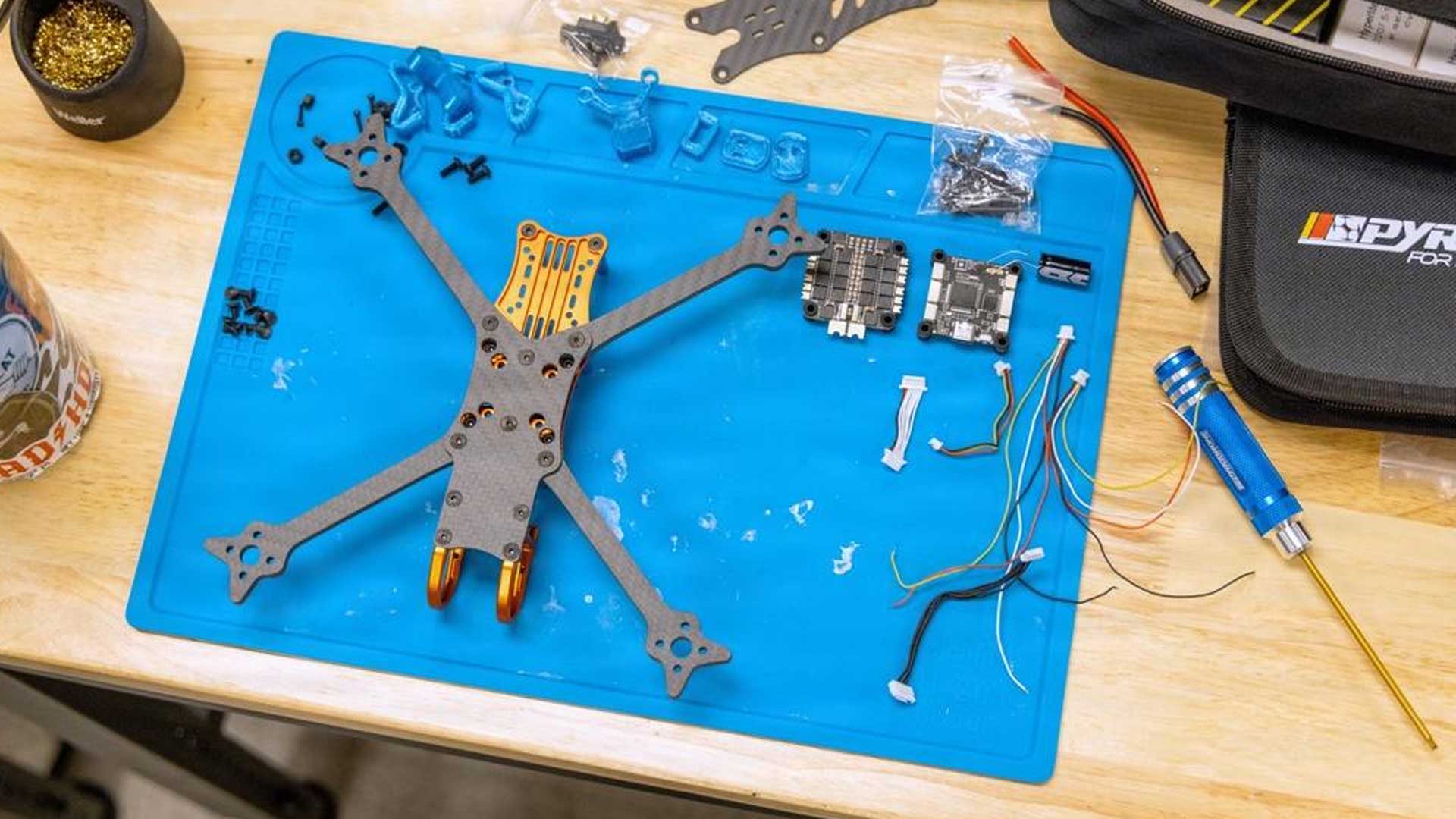
Modern warfare is undergoing a fundamental transformation. Unmanned aerial systems (UAS), once primarily associated with high-value intelligence, surveillance, and reconnaissance missions, have evolved into increasingly accessible and expendable military assets. From small reconnaissance quadcopters to sophisticated autonomous platforms, drones are changing how military forces conduct operations, assess threats, and allocate resources. Their proliferation is also exposing limitations in traditional defense procurement and supply chain management.
Historically, defense acquisition has emphasized highly specialized platforms with extended development cycles, rigorous qualification requirements, and service lives measured in decades. While these approaches remain appropriate for complex systems such as fighter aircraft, naval vessels, and strategic weapons, the growing demand for relatively inexpensive unmanned systems introduces a different procurement challenge. Military organizations must increasingly acquire, deploy, replace, and upgrade equipment at a pace more closely resembling commercial electronics markets than conventional defense manufacturing.
This shift has significant implications for the defense industrial base, particularly the sourcing and availability of electronic components, propulsion systems, sensors, communications equipment, and other critical materials.
From High-Value Platforms to Scalable, Attritable Systems
One of the most consequential developments in contemporary military operations is the growing operational importance of relatively inexpensive drones. Recent conflicts have demonstrated that small unmanned systems can provide meaningful tactical capabilities without requiring the financial investment traditionally associated with military aviation.
These systems are increasingly used for battlefield reconnaissance, targeting support, communications relay, and other mission functions. Their comparatively low acquisition costs also make it possible to deploy them in larger quantities, accepting losses that would be economically or operationally unacceptable for traditional aircraft.
The implications extend beyond the battlefield. Procurement organizations must account for equipment that may have significantly shorter operational lifespans, require frequent replacement, and undergo continuous technological improvements. Rather than purchasing a limited number of expensive platforms and sustaining them for decades, defense organizations must develop the capacity to procure substantial quantities of rapidly evolving systems.
The U.S. military’s emphasis on unmanned capabilities reflects this transition. According to the Congressional Research Service, the Army’s fiscal year 2026 budget request included approximately $803.9 million for procurement and research, development, testing, and evaluation associated with selected small UAS programs. This represented a substantial increase in requested procurement funding compared with previous years.
The broader strategic implication is that industrial capacity, component availability, and manufacturing responsiveness are becoming increasingly important measures of military readiness.
The Growing Importance of Commercial Electronics
Unlike many traditional military platforms, smaller unmanned systems frequently incorporate technologies derived from commercial electronics markets. Semiconductors, microcontrollers, batteries, imaging sensors, radio-frequency components, navigation modules, and electric motors are central to their operation.
This reliance on commercial technologies offers several advantages. Manufacturers can leverage existing research and development investments, access established production ecosystems, and incorporate technological improvements more rapidly than would be possible through entirely defense-specific development programs.
However, it also introduces supply chain vulnerabilities.
Commercial electronic components are frequently manufactured through geographically distributed supply networks. A single system may depend on semiconductor fabrication facilities, packaging operations, specialized materials suppliers, and component distributors located across multiple countries. Disruptions affecting any of these suppliers can create delays that extend throughout the manufacturing process.
Defense manufacturers face additional challenges when commercial components are discontinued, revised, or replaced by newer generations. A component that is readily available during initial production may become difficult to source several years later, particularly when manufacturers prioritize newer commercial products.
Consequently, procurement organizations must increasingly consider component lifecycle management, alternative sourcing strategies, supplier qualification, and inventory availability during the earliest stages of system development.
Supply Chain Security Is Becoming a National Security Priority
The expanding use of commercial components in military unmanned systems has also intensified concerns regarding foreign dependencies and supply chain security.
Defense systems must satisfy requirements extending beyond basic functionality and cost. Procurement teams must consider component provenance, cybersecurity risks, manufacturing integrity, and applicable restrictions on sourcing from designated foreign entities.
These concerns have prompted changes in federal policy and acquisition practices. The fiscal year 2025 National Defense Authorization Act directed the Department of Defense to establish measures for identifying supply chain risks associated with small unmanned aerial systems and improving resilience through domestic suppliers and trusted international partners.
The Defense Innovation Unit’s Blue UAS initiative has likewise established a framework for evaluating unmanned systems and components against applicable security and compliance requirements. In December 2025, responsibility for the Blue UAS Cleared List transitioned to the Defense Contract Management Agency, reflecting efforts to expand and institutionalize the procurement of vetted systems.
These developments underscore an important distinction between commercial availability and defense suitability. A component may be inexpensive, technically compatible, and immediately available while still failing to satisfy procurement restrictions or supply chain assurance requirements.
For defense contractors and government acquisition professionals, supplier verification and documented component traceability are therefore essential elements of responsible procurement.
Procurement Speed Is Becoming a Competitive Advantage
Traditional defense acquisition processes were developed to manage complex programs involving substantial financial commitments, technical uncertainty, and long operational lifespans. Although these processes provide important oversight, they can be difficult to reconcile with technologies that evolve rapidly and may require frequent replenishment.
Small unmanned systems highlight this tension.
A drone platform developed around commercially available components may undergo several hardware revisions within the timeframe required to complete a conventional acquisition cycle. Similarly, operational demand can increase unexpectedly, requiring manufacturers to expand production or secure additional component inventories with limited advance notice.
Federal agencies are increasingly exploring procurement approaches designed to address these challenges. In September 2026, the U.S. Air Force issued a Commercial Solutions Opening seeking innovative technologies supporting small UAS and asymmetric mission capabilities. The initiative illustrates continued interest in accessing commercially developed technologies through more responsive acquisition pathways.
For suppliers, responsiveness involves more than expedited shipping. It requires visibility into component availability, established relationships with qualified manufacturers and distributors, and the ability to identify acceptable alternatives when preferred parts become unavailable.
Organizations that develop these capabilities can help reduce procurement delays and improve production continuity without sacrificing necessary quality or compliance controls.
Building a More Resilient Defense Industrial Base
The increasing demand for unmanned systems is placing renewed attention on the resilience of the domestic defense industrial base. Manufacturing capacity alone is insufficient if producers cannot reliably obtain the materials and components required to sustain production.
A resilient supply chain must account for multiple forms of risk, including geographic concentration, limited manufacturing capacity, supplier financial instability, component obsolescence, and unexpected demand fluctuations.
Addressing these vulnerabilities requires greater coordination among original equipment manufacturers, component suppliers, distributors, and government procurement organizations. Manufacturers must evaluate the availability and substitutability of critical components, while procurement teams must establish sourcing strategies that account for both immediate requirements and future sustainment needs.
Inventory management also becomes more consequential as production volumes increase. Maintaining appropriate stocks of long-lead-time components can reduce exposure to disruptions, but excessive inventory creates financial and obsolescence risks. Effective procurement therefore requires balancing availability, cost, qualification requirements, and anticipated demand.
The federal government’s growing focus on these challenges is evident in its broader industrial policy. The Department’s Drone Dominance Program Supply Chain Framework, announced in April 2026, emphasizes reducing dependencies on covered countries and expanding domestic production capacity throughout the small UAS supply chain.
For defense manufacturers, these initiatives reinforce the importance of developing sourcing relationships that support both regulatory compliance and sustained production at scale.
The Future of Military Procurement
The proliferation of unmanned aerial systems represents more than the introduction of another category of military equipment. It signals a broader evolution in how defense organizations evaluate technological capability, affordability, production capacity, and operational sustainability.
Traditional acquisition models will continue to play an essential role in major defense programs. However, rapidly evolving and attritable systems require complementary approaches that emphasize shorter procurement cycles, scalable manufacturing, dependable component availability, and responsive logistics.
The ability to produce and replenish military equipment at operationally relevant speeds may become as important as the technical sophistication of individual platforms.
For organizations throughout the defense supply chain, adapting to this environment requires a renewed emphasis on supplier relationships, component traceability, lifecycle planning, and procurement flexibility. Those capabilities will be critical to supporting the next generation of unmanned systems and the military organizations that depend on them.
Supporting the Next Generation of Defense Readiness
As unmanned systems become increasingly integral to military operations, the reliability of the underlying supply chain will remain a determining factor in operational readiness. From electronic components and specialized hardware to replacement parts and critical materials, timely access to qualified products is essential for maintaining production schedules and supporting mission requirements.
At Obsidian Defense Logistics, we recognize that defense procurement demands more than simply locating available inventory. It requires attention to supplier integrity, component traceability, regulatory requirements, and the operational consequences of supply chain disruption.
As military technology continues to evolve, dependable sourcing and responsive logistics will remain foundational to the defense industrial base and its ability to deliver critical capabilities when they are needed most.